RELAY REPORT: OREGON (PORTLAND) MAY 3RD, 2026
“Our culture isolates us, but interdependence is innate knowledge.”
“If you fall, I will catch you, I will be waiting… time after time.”
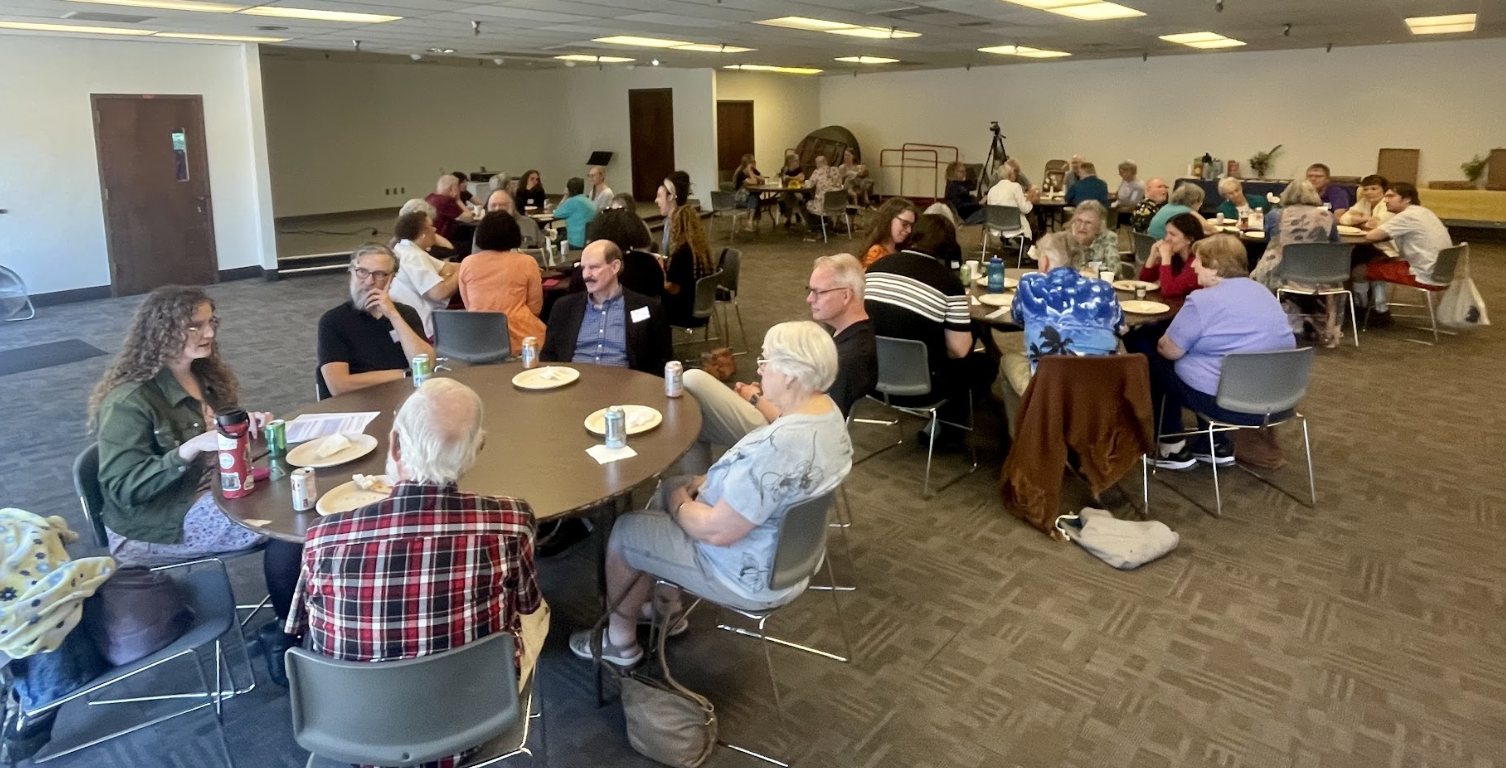
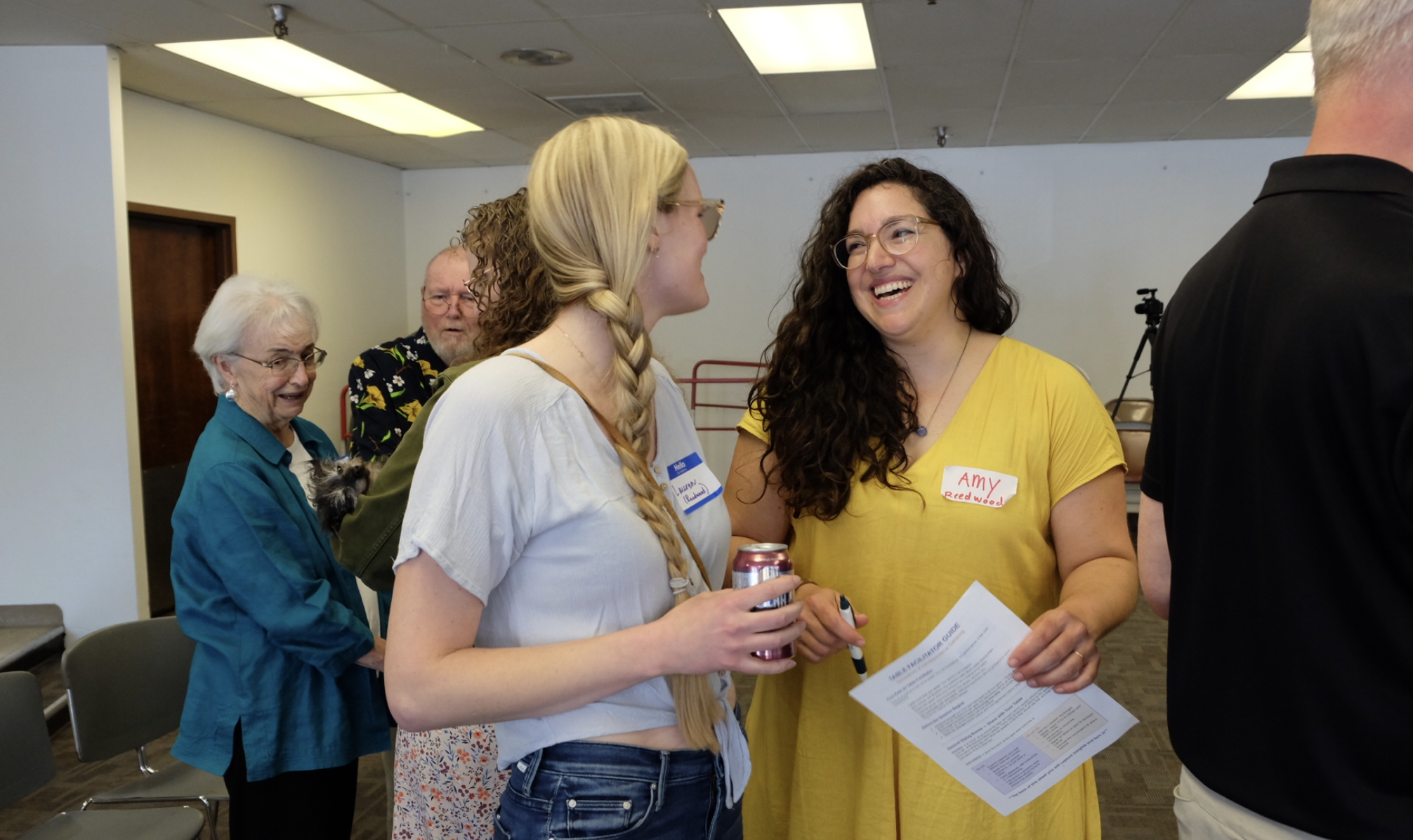
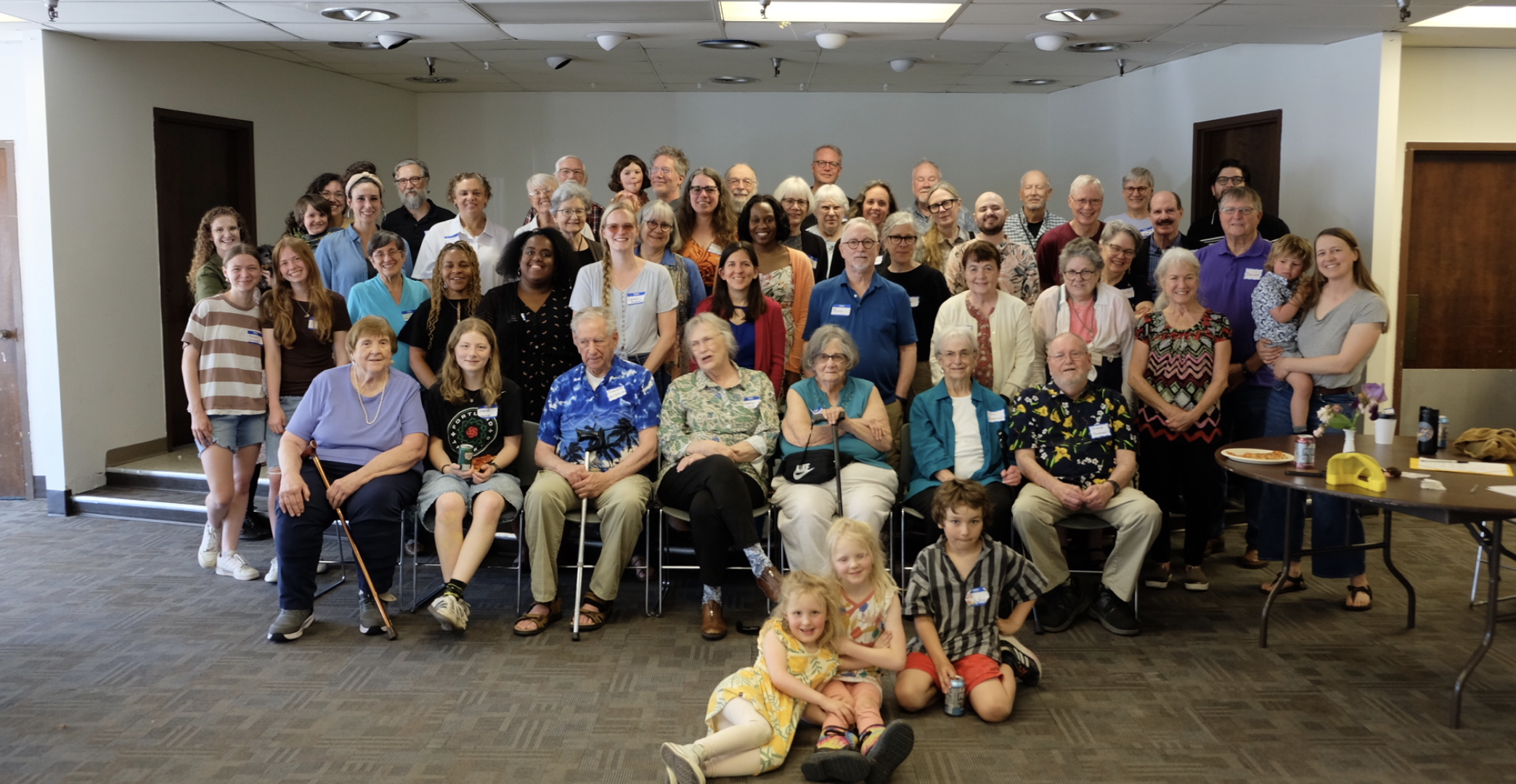
On May 3rd, members of multiple faith communities (Reedwood Friends, Bridge City Friends Meeting, Peace Church of the Brethren, Sellwood Soto Zen Sangha and Enth Church), along with assorted curious Portland neighbors, gathered together in the Reedwood Friends basement on an unseasonably warm Sunday afternoon. They were greeted warmly, fed Costco pizza and seltzer, and welcomed with a gorgeous reflection—not a perfunctory land acknowledgment, but a meditation on how, whenever we turn towards each other, we are traveling a well trod path.
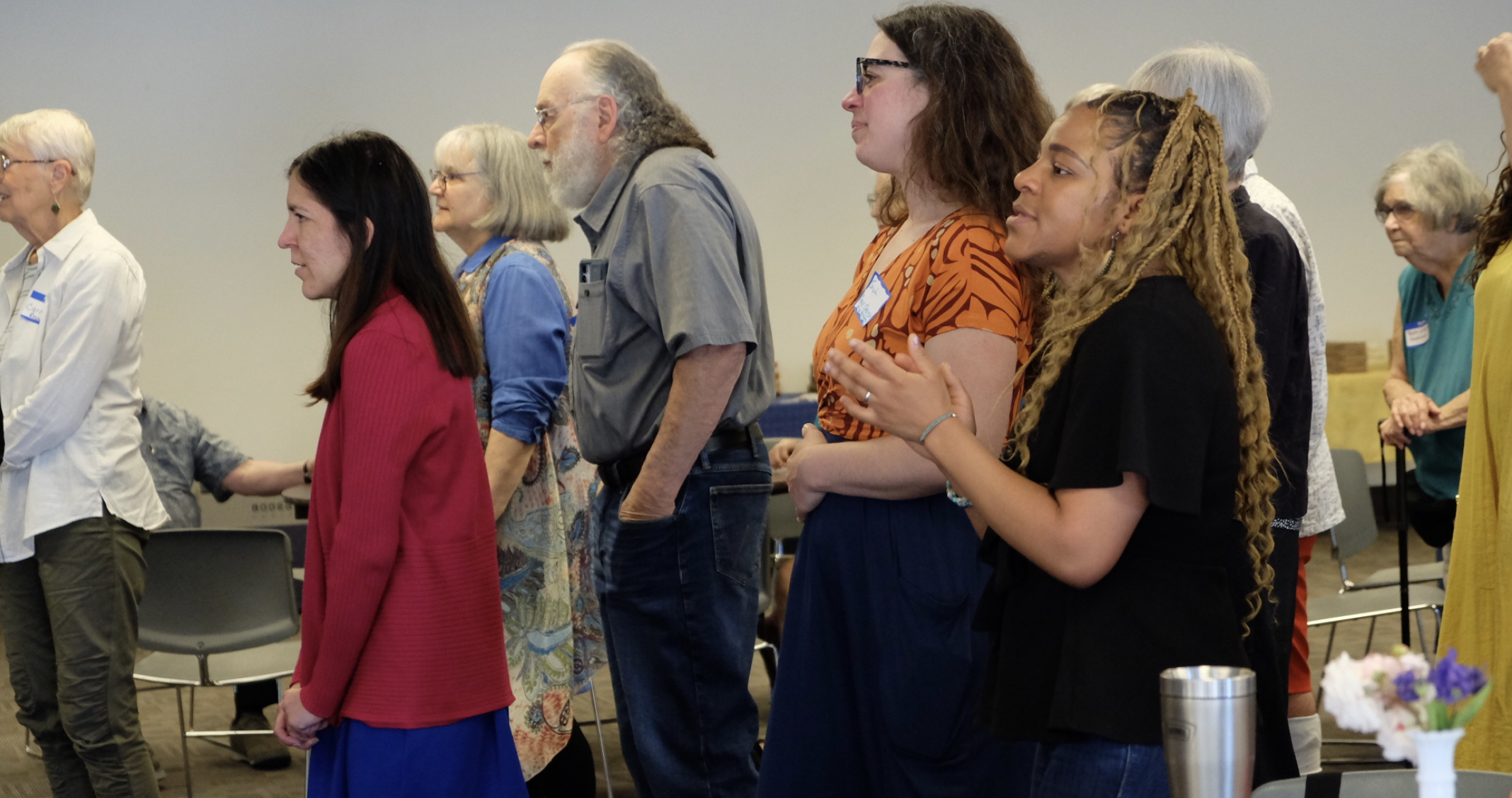
And then, the group, strangers and friends alike, sang. Led by beloved local musician Low Bar Chorale, the inter-generational crew joined in a trio of songs selected for two reasons: their message, yes, but more so their accessibility. Familiar melodies. Beloved standards. “Stand by Me,” “This Land is Your Land,” and, of course, “Time after Time.”
All of this was by design. The goal of the gathering was a collective exhale, a room where everybody gathered felt safe and welcome.
Frequently, that kind of aspiration can, without thought or connection to a broader purpose, come off as shallow. But in this case, it was beautifully representative of this moment in Reedwood Friends’s shared story. From their perch in Southeast Portland, Reedwood is both committed to their history and identity as a religious community, while also asking a beautiful and terrifying set of questions about how to be a home for people who haven’t found a place in faith communities previously. In a moment when so many congregations are wrestling with what it means to engage with the world, Reedwood is leaning all the way in, simultaneously hosting other worship communities and all-ages punk shows while also building a space where members with a full range of theologies– from more evangelical to more humanistic– can learn and build together.
Those are lofty goals, but they start from trust and a spirit of abundance, two qualities that Reedwood’s relay event embodied profoundly. As the event was starting, organizers who were newer to Reedwood marveled at their discoveries in the basement meeting space – tablecloths, punch bowls, everything you could ever need for hosting. The realization? This was a community with a long history of gathering for large events. There were assets here for the journey ahead.
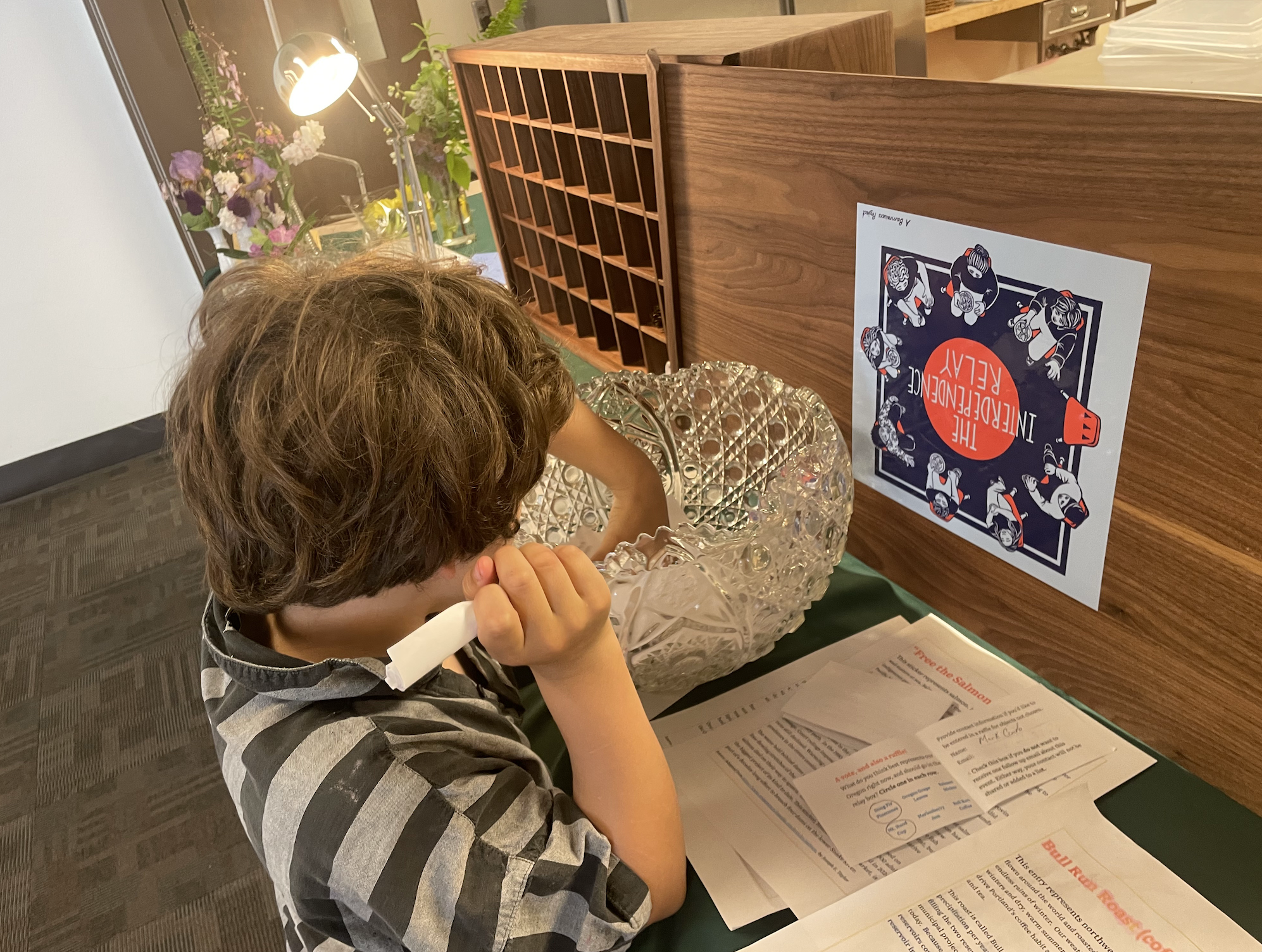
Every choice made at the event was designed to build even more trust and belonging. The group singing, naturally, but also the collaborative process by which they came to both their declarations and their box contribution. The former emerged from table conversations. The latter came from a group vote.
Rather than choosing a representative item for the group, organizers offered a wide variety of choices, each with a place-centered story. Bull Run coffee beans represented Oregon’s friendly-for-coffee-drinking climate (and therefore interconnection with climates better suited for coffee growing) as well as connection to watersheds (bull run is the primary watershed for Portland— water levels are a major concern in the community this year during a dry season); a cup emblazoned with an image of Wy’East (Mount Hood) represented transformation, Oregon Grape Leaves represented community and healing; and a salmon sticker represented connection (in the face of attempts to drive communities apart). As for the winning items, a Douglas Fir pine cone and a jar of Marionberry jelly? You can learn more about that story below.
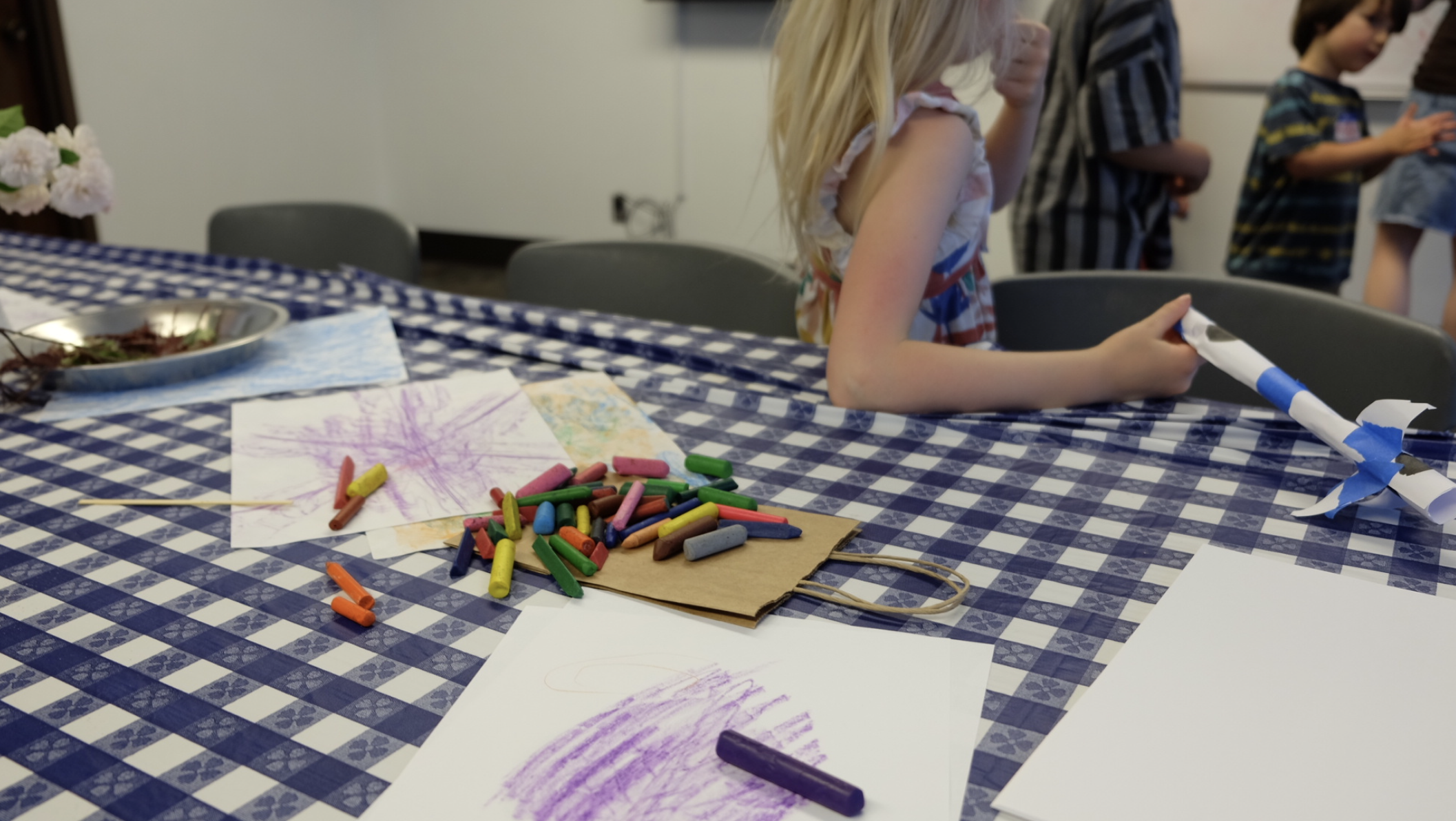
When organizers looked back at the photos of the event, a clear theme emerged. Yes, these are serious times. In a moment when faith is frequently used as a wedge to drive people apart, the work of imagining religious spaces as home for believers and non-believers alike is important and complicated. But in spite of that subtext, the event was far from funereal. Photo after photo reveals a room of wide smiles, reflective of a church basement full of levity, laughter, and the chaos of kids running under foot. When the event finished, Reedwood elders and first-timers agreed that this shouldn’t be the last gathering like this. The third song they sang that morning proclaimed “this land is made for you and me.” And on Sunday, this bright basement in Southeast Portland was made for all, in the best possible way.
WHAT DECLARATIONS OR COMMITMENTS CAME OUT OF THE GATHERING?
The gathering developed their declarations through table discussions. First they discussed themes of interdependence in their lives, then reflected on what they heard from each other, and used those reflections to create the following offering for the broader relay community.
"We declare a commitment to acts of mutual reliance and care in all seasons of our lives, whether in celebration, struggle, or the mundane day-to-day.
We will fulfill these acts, and receive them, with humility, openness, authenticity, integrity and love, with an ambition of cultivating solidarity and harmony across differences in our relationships and our broader communities.
With these acts, we aim to create a world where each individual receives the gifts of dignity, love, power and justice, and we aspire to be open to receiving these gifts ourselves.
With these acts, we endeavor to tend and carry forward the spark of symbiotic connection and spirit that defines our very existence."
WHAT WENT IN THE BOX:
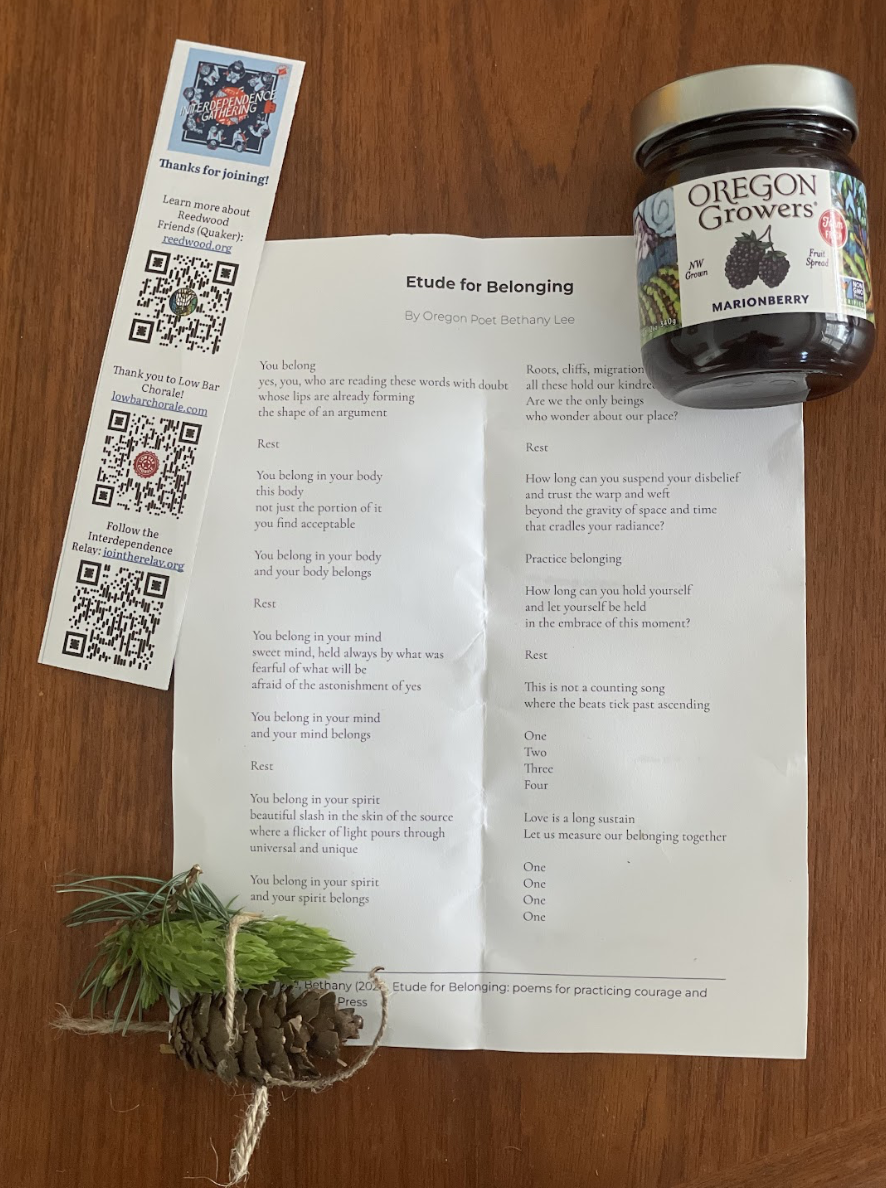
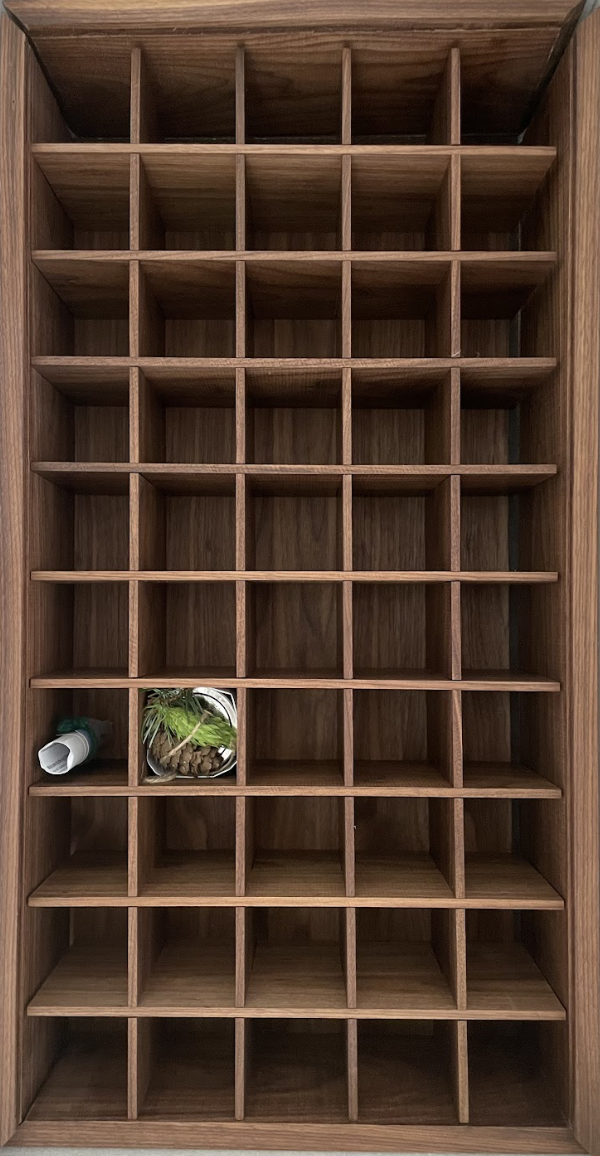
A poem (“Etude for Belonging” by Quaker poet (and Oregonian) Bethany Lee, a Doug Fir pine cone and jar of Oregon Marionberry jam, the latter items selected from a number of options (see above) by a group vote. Here’s how organizers described each choice, two longstanding points of Oregonian pride:
Douglas-fir pinecones represent possibility and resilience. The Douglas-fir (Pseudotsuga menziesii), the most abundant tree in Oregon, has shaped Oregon’s history economically and ecologically. Douglas-fir grows across Oregon’s varied ecosystems from sea level to high mountains. Because of their immense size and thick bark, larger trees can survive wildfire and reseed themselves in many burned-over areas.In fact, the very existence of extensive stands of Douglas-fir is due to forest fires. The species’ fire-specific adaptations have enabled it to survive and remain a dominant element in western forests. Without fire or other drastic disturbance, Douglas-fir would gradually be replaced throughout much of its range by the more tolerant hemlock, cedar, and true fir.
Douglas-fir has been vital to humans for centuries. Indigenous peoples traditionally used Douglas-fir wood for fuel, small utensils, and tools; they used its pitch for sealing joints and caulking canoes and water containers. They also used the tree and its parts for a variety of medicinal purposes.
Today, Douglas-fir produces more wood products for human use than any other tree and is harvested from second-growth plantation trees or smaller trees in overstocked stands as most old-growth stands have been harvested.
Marionberry represents creativity. The Marion was hybridized and released in 1956 through the USDA-Agricultural Research Service (ARS) and the Oregon Agricultural Experiment Station, and named after Marion county.
The marionberry contains 44 percent Rubus ursinus (the only truly native blackberry in Oregon, characterized by its outstanding flavor), 25 percent R. armeniacus (the Himalaya, a weed introduced from Europe in the late 1800s), and 6 percent R. idaeus (the red raspberry).
Marionberry is the most widely planted trailing blackberry in the world, and a vigorous, thorny plant.
Sources:
https://www.srs.fs.usda.gov/pubs/misc/ag_654/volume_1/pseudotsuga/menziesii.htm
https://www.oregonencyclopedia.org/articles/douglas_fir/ Adapted from article by Frank A. Lang
Adapted from article by Bernadine Strik https://www.oregonencyclopedia.org/articles/marionberry/