RELAY REPORT: WASHINGTON STATE (SEATTLE) APRIL 22ND, 2026
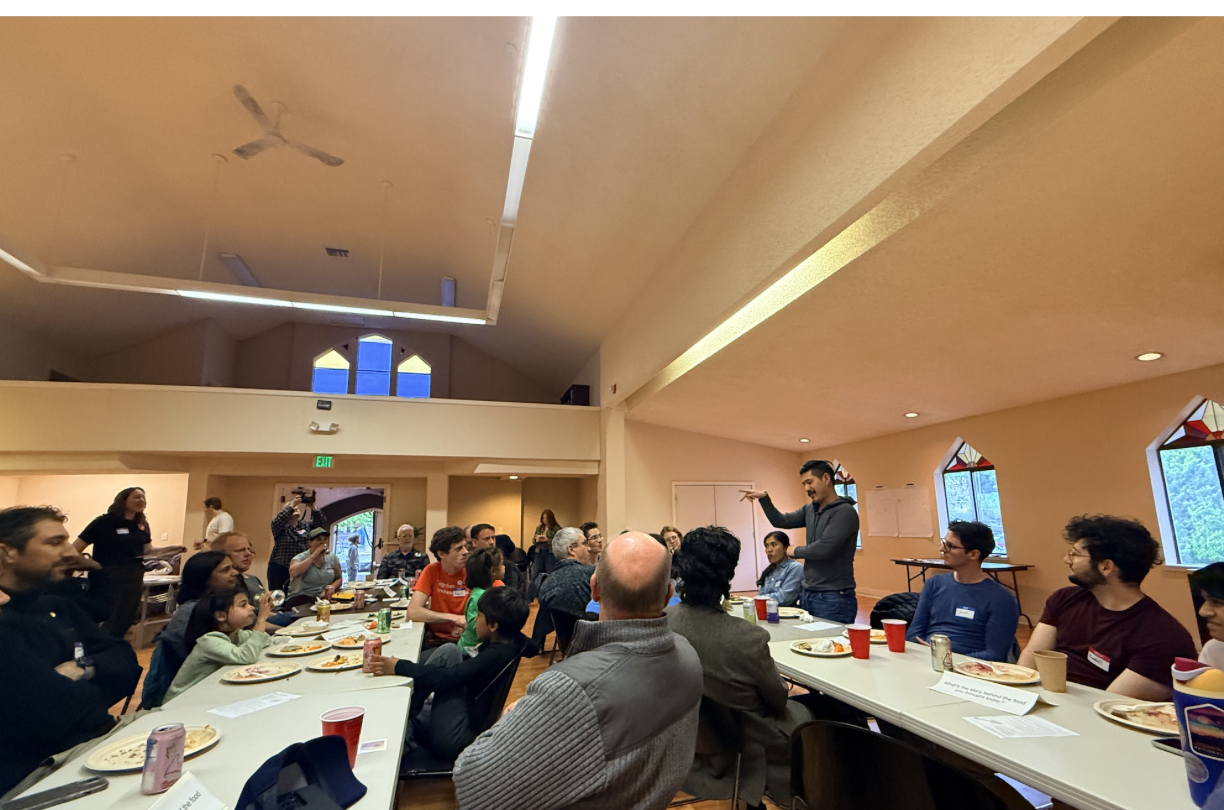
The organizers behind the Columbia City Neighbors Club want you to know that they aren’t special. You can do what they do in your neighborhood too. It doesn’t take all the charisma and organization in the world to host a monthly potluck, or to say yes to all sorts of other ideas for gatherings. But also, there’s a reason why neighbors strolling down the street in front of the open doors of Southside Commons felt comfortable grabbing a plate, even if they hadn’t heard about the event or group previously. There’s a reason why one of those first timers remarked, mid-way through the evening, that he had just texted an old friend to say “so THIS is what I was searching for in church for twenty years.” There’s a reason why long-time neighbor club members cite this space as one of the most meaningful additions to their life.
Yes, anybody can do what the Neighbors Club does, but that doesn’t mean it’s not special.
This is a club that didn’t exist before June 5th, 2025. Its founder, Nicole, went to the local farmers market and sat down with a simple sign: “Do you want to meet a neighbor?” She asked the question because she knew the answer for herself. She had lived in Columbia City, a dense, walkable neighborhood with plenty of natural gathering spaces, for years. But the majority of people she saw walking around each day were still strangers. She wanted to change that, and had the sense that she wasn’t alone. So she asked.
Again, simple. Replicable. But isn’t that true for most special things?
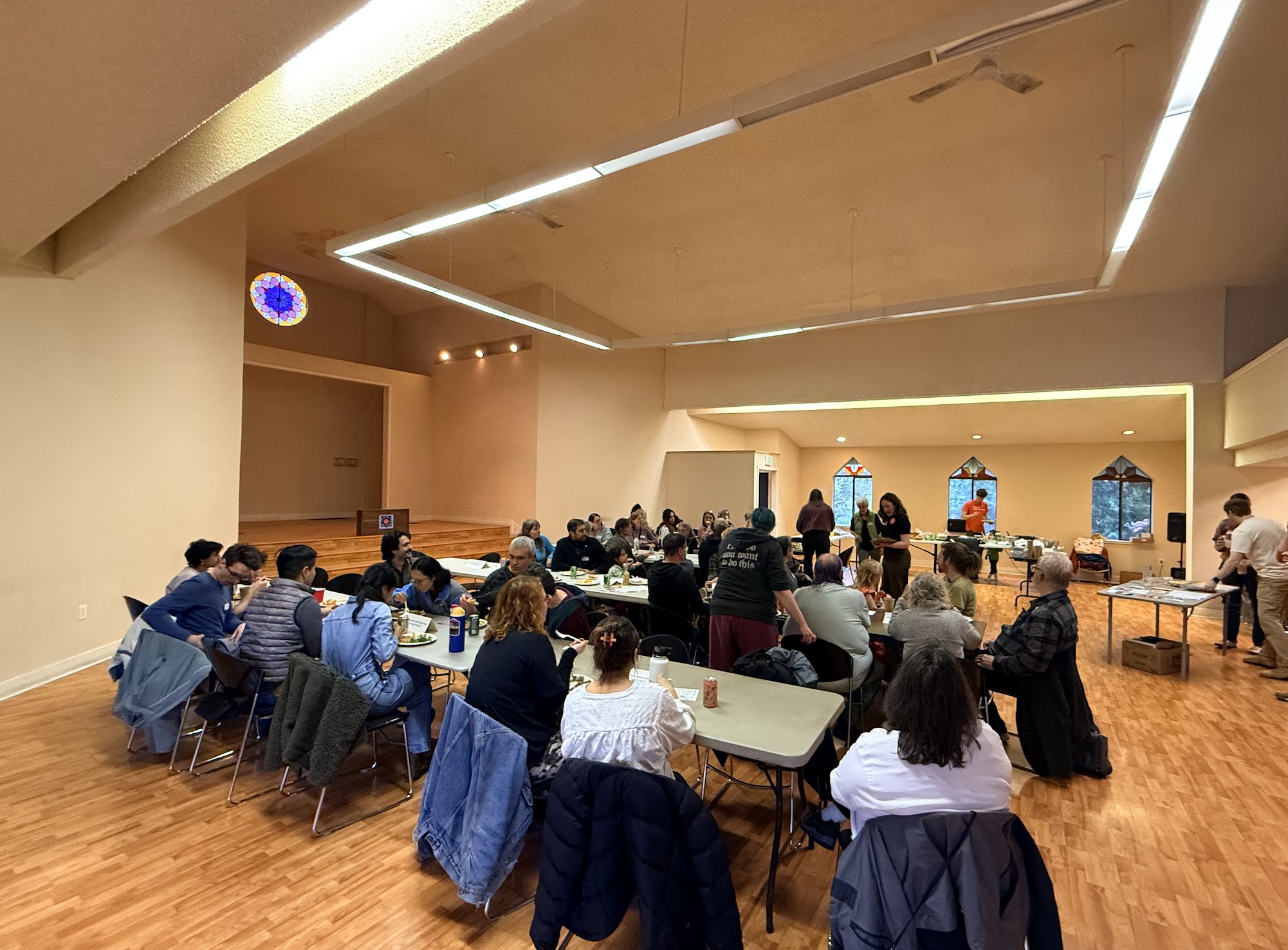
When the 58 neighbors arrived for April’s potluck/relay kick off, they were greeted, given a copy of that evening’s poem (every gathering includes a poem) and directed to grab a plate and help themselves to the overflowing buffet. Once they sat down, table tents directed them to “share the story of the food you brought today.”
Soon, the room was buzzing easily. Kids who at first huddled close to their parents found each other. Everybody ate, and everybody shared.
Then, the monthly ritual, focused this time around on the relay’s theme of interdependence. Neighbors were invited to stand up and make asks and invitations of each other, of any size and complexity. Like the potluck line, there was more than enough of both to go around.
“We need help fixing a stove.”
“We’re working on starting a cohousing community and would love to talk to you about it.”
“We want to celebrate the recent successful neighborhood clothing exchange and let you know that we’re planning another one.”
“I’ll have the fire lit in my backyard a couple nights from now. Everybody’s welcome.”
“I’ve recently gotten really into making yogurt in the Instant Pot and would love to teach you how.”
“I just got a CPAP and need advice on where to find distilled water for it.”
“We’re starting a writing group, and we’d love if you could join us.”
“Does anybody have leads on a dog sitter?”
“I just love dogs so much and want to play with them. Does anybody have a dog I can play with. I don’t even have to be paid?’
[Yes, those last two connected with each other].
The poem was read. The relay was introduced, and everybody was invited to write reflections on chart paper on the walls, a response to one more interdependence prompt.
“One year from now, I hope to know a neighbor well enough to…”
And then, well, nobody wanted to leave. Guests from other Seattle neighborhoods– some with established groups of their own, others seeking to start them– traded ideas with Columbia City organizers. The kids played a scavenger hunt. Folks who had made asks and offers found each other and made plans.
One idea that’s come up lately, as the Neighbors Club further defines their future together, is an acceptance of the mystery of being a neighbor. The goal isn’t to lead each other in one, narrow direction. It’s to keep bringing people together, in more and more combinations, and then being open to all the paths that reveal themselves as a result.
“This isn’t hard,” the Columbia City Neighbors assure anybody who asks. Their slogan is “from strangers to neighbors, from neighbors to community.”
And they’re right. None of those individual steps require a specialized set of skills. But they don’t just happen. They require neighbors who realize how lucky we all are, to get to be in the messy, complicated, beautiful work of neighboring together.
WHAT DECLARATIONS OR COMMITMENTS CAME OUT OF THE GATHERING?
It was, in many ways, a night of a thousand commitments: the asks and offerings, the dreams of how people would like to be a neighbor a year from now, new friendships and schemes forged together. But by far, the most resonant and powerful commitment wasn’t planned. Zach, the host of the regular fire pit, shared the following spontaneous reflection with the group, inspiring a wave of nods and affirmations.
“When we talk about barriers to interdependence, we need to talk about shame and how it keeps us from asking each other for help. My question for all of us tonight is this: ‘what are you doing to be brave, to face that shame, and to truly be who you want to be for each other?”
WHAT WENT IN THE BOX?:
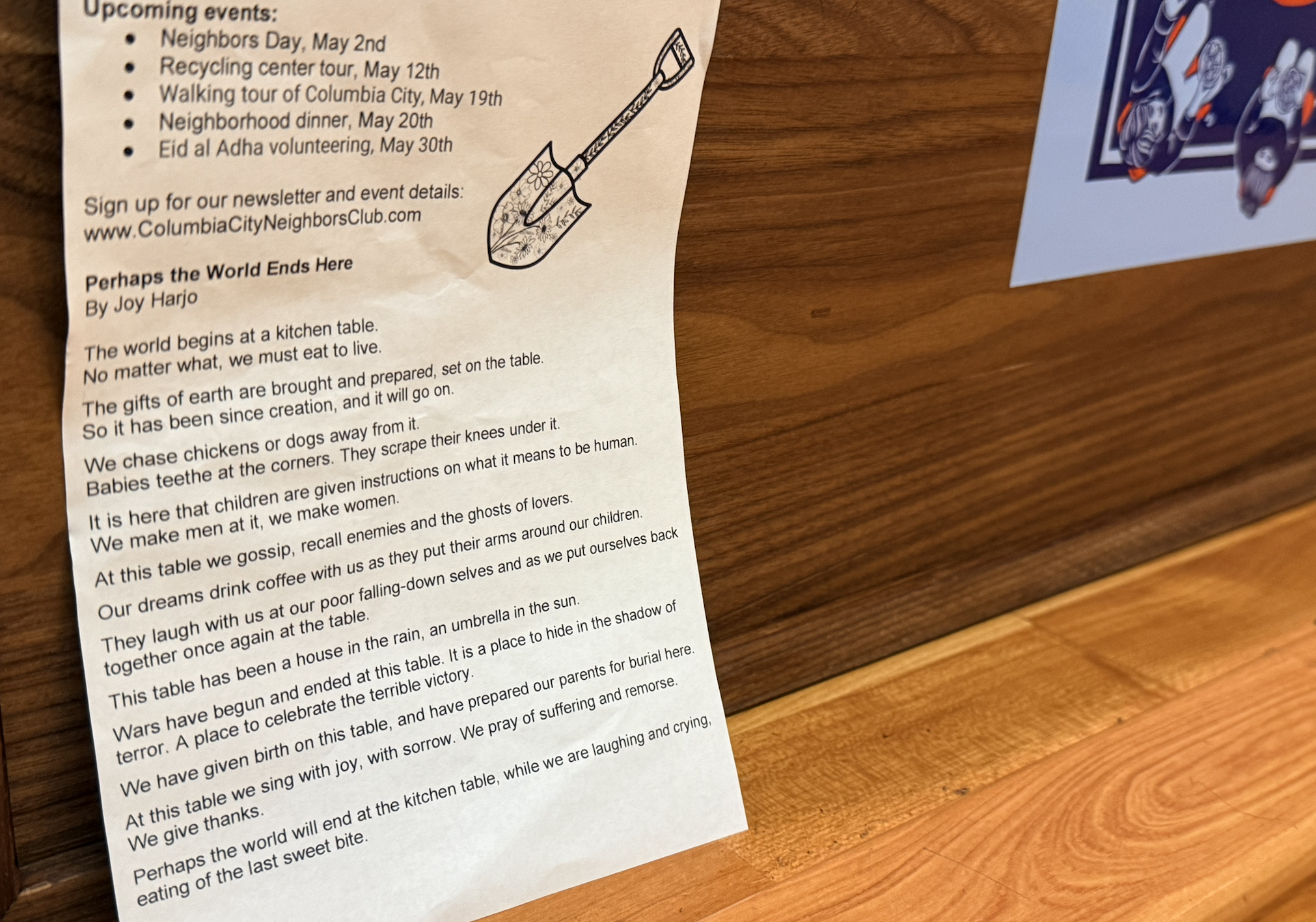
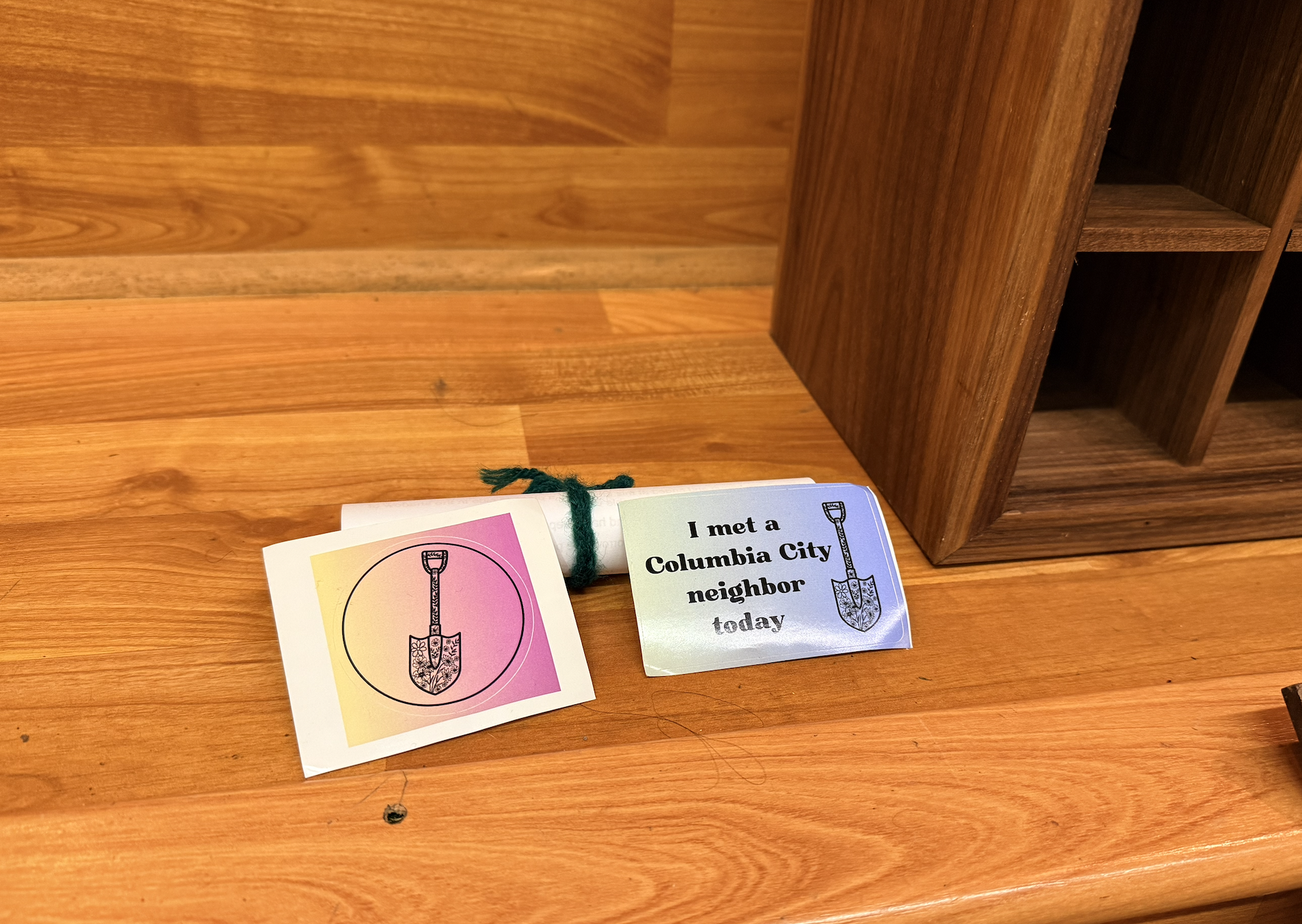
-A copy of this month’s poem, Perhaps the World Ends Here by Joy Harjo (see below), alongside a list of upcoming events (Neighbors Day, recycling center field trip, walking tour of the neighborhood, May community dinner, and Eid al Adha volunteer opportunity), rolled up like a scroll and tied up with a piece of green felt.
-That felt, in turn, represented moss, a reference to how the group spent February 6th. That date, in Seattle, is the unofficial civic holiday, “206 day” (in honor of a common Seattle area code). It’s also a pretty miserable meteorological time in that area of the country. But every community has assets, even when the flowers aren’t blooming, so the Neighbors Club spent 206 day celebrating the region’s omnipresent moss. They adorned themselves in green felt (one of which would later find new life as a scroll tie) and invented a moss dance, which involves constantly moving your feet (moss is rootless) and circulating your arms the same way that moss plays a circulating role in the ecosystem. It’s impossible to do the moss dance in a circle of neighbors and not crack up.
-Two stickers, one with the club’s logo (a rendering of their neighborhood’s iconic shovel sculpture, which features etchings of plants from all the countries of origin represented in Columbia City) and the other declaring, quite simply “I met a Columbia City neighbor today.”
Everybody who came did, by the way. Everybody who comes to any Neighbors Club event does, always.
Want to read more about the event and the Neighbors Club? Check out this article by Jacquelyn Jimenez Romero in the South Seattle Emerald