RELAY REPORT: HAWAII (KALĀHEO, KAUA’I) MAY 16, 2026
The island of Kauai, Hawaii is home to less than 80,000 permanent residents. Every week, roughly that same number of people arrive by boat and plane as tourists. There’s a long and rich story behind this island: of pre-colonial loyalties, rivalries and conflicts, of the transformation of the economy in the plantation era, of U.S. colonization. It’s a place where residents— both native Hawaiians and those whose roots are elsewhere— can’t take their interconnectedness for granted, both with each other and the outside world.
Not surprisingly, “the Garden Island” is a deeply entrepreneurial place. It’s lush and verdant, but its resources are limited. As residents will remind you, if just a couple barges fail to show up, the shelves will be empty. There’s an understanding of scarcity here, across class lines, but also a drive to figure out how to put the pieces together. It’s not uncommon for Kaua'ians to cobble together multiple income streams and side hustles.
Kauai values community, but there are challenges to building and sustaining it. There are no roads across the middle of the island, only around its perimeter. North Shore and South Shore Kauai can, at times, feel like entirely different worlds. And while tourism is the largest economic activity on the island, it can add to a dynamic where infrastructure, entertainment, and gathering places are geared towards visitors rather than locals.
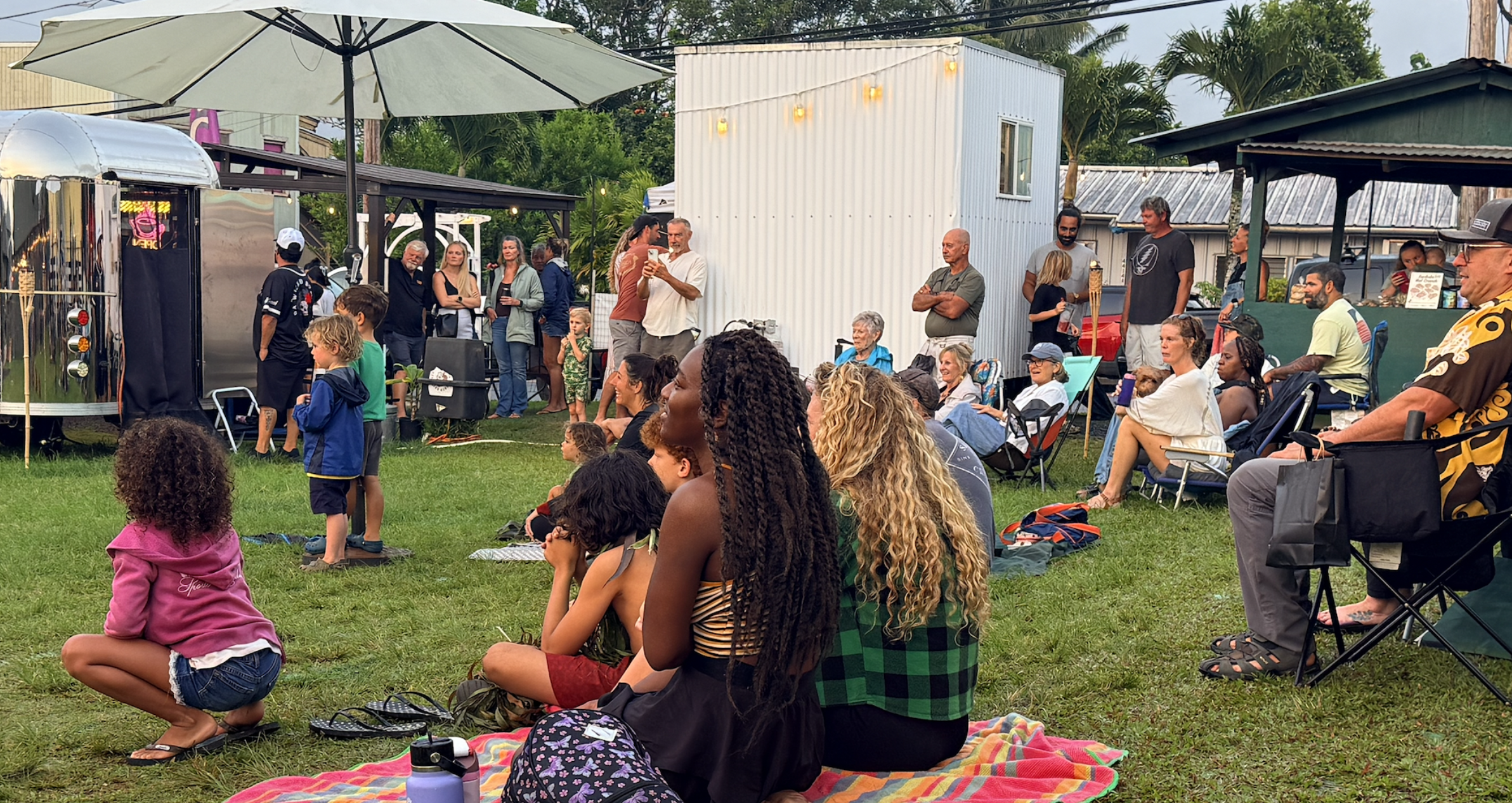
You don’t need to know all of this context to enjoy a lovely evening at Yellow House Kalaheo. You can just experience it as a great place to grab a meal and hang out. You can get a coffee in the morning and a margherita pizza or a plate of massamum curry at night. You can pull up a blanket on their grassy lawn and encourage your kids to check out the outdoor library in the back. If you’re there for an event, you can enjoy some local entertainment or chat up a neighbor. Stick around long enough, and you’ll probably make it back to the food trucks for a gelato or a Korean corn dog.
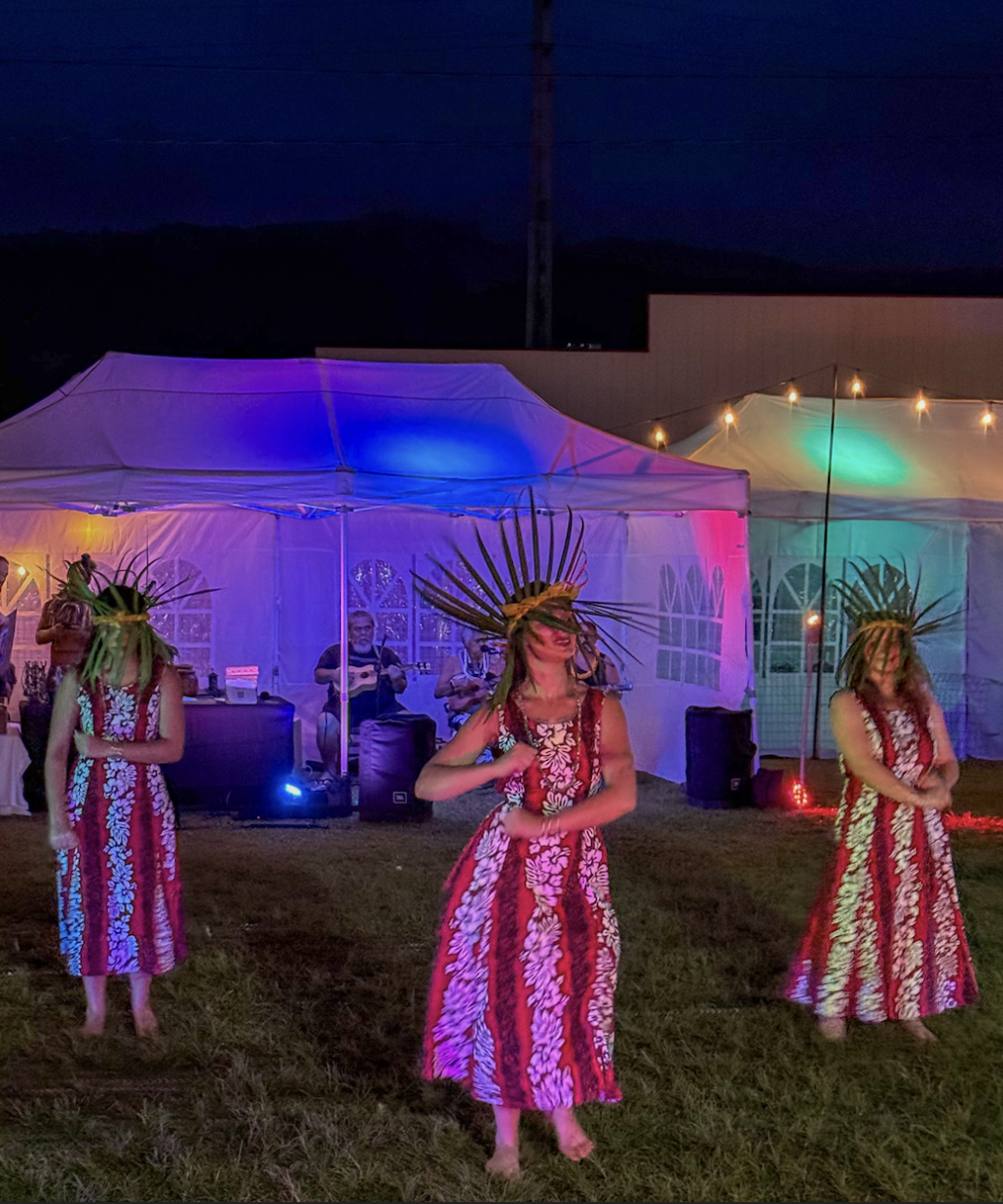
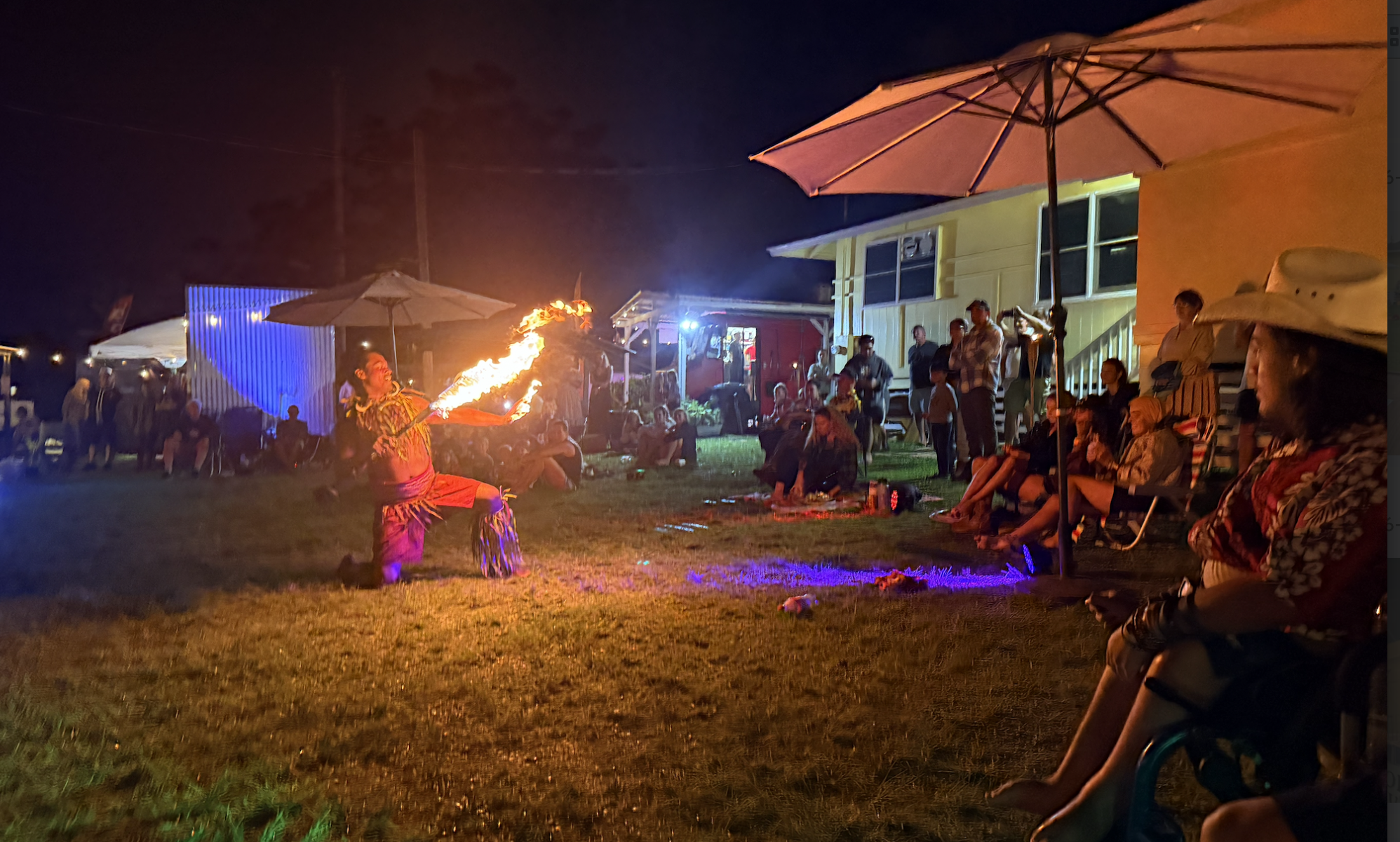
But knowing that context helps. It explains why, for instance, if you were fortunate to join the crowds at the Interdependence Relay event on May 16th, you would have gotten to enjoy an evening of Polynesian dancing and fire knife demonstrations by Pōmaikaʻi and his student Mason, and sons Jack and Jordy. Their central role at the event wasn’t just due to the fact that they put on a great show, nor that they are well-respected keepers of Polynesian culture on the island. It’s rare, on the island, for performances like this to be hosted by and for locals, not at the big resorts.
That’s the implicit message of Yellow House: KauaI locals deserve a third space of their own on the island, but also, if they’re going to succeed, it’ll be by supporting each other, by lifting each other up—as entrepreneurs and customers, but also as neighbors.
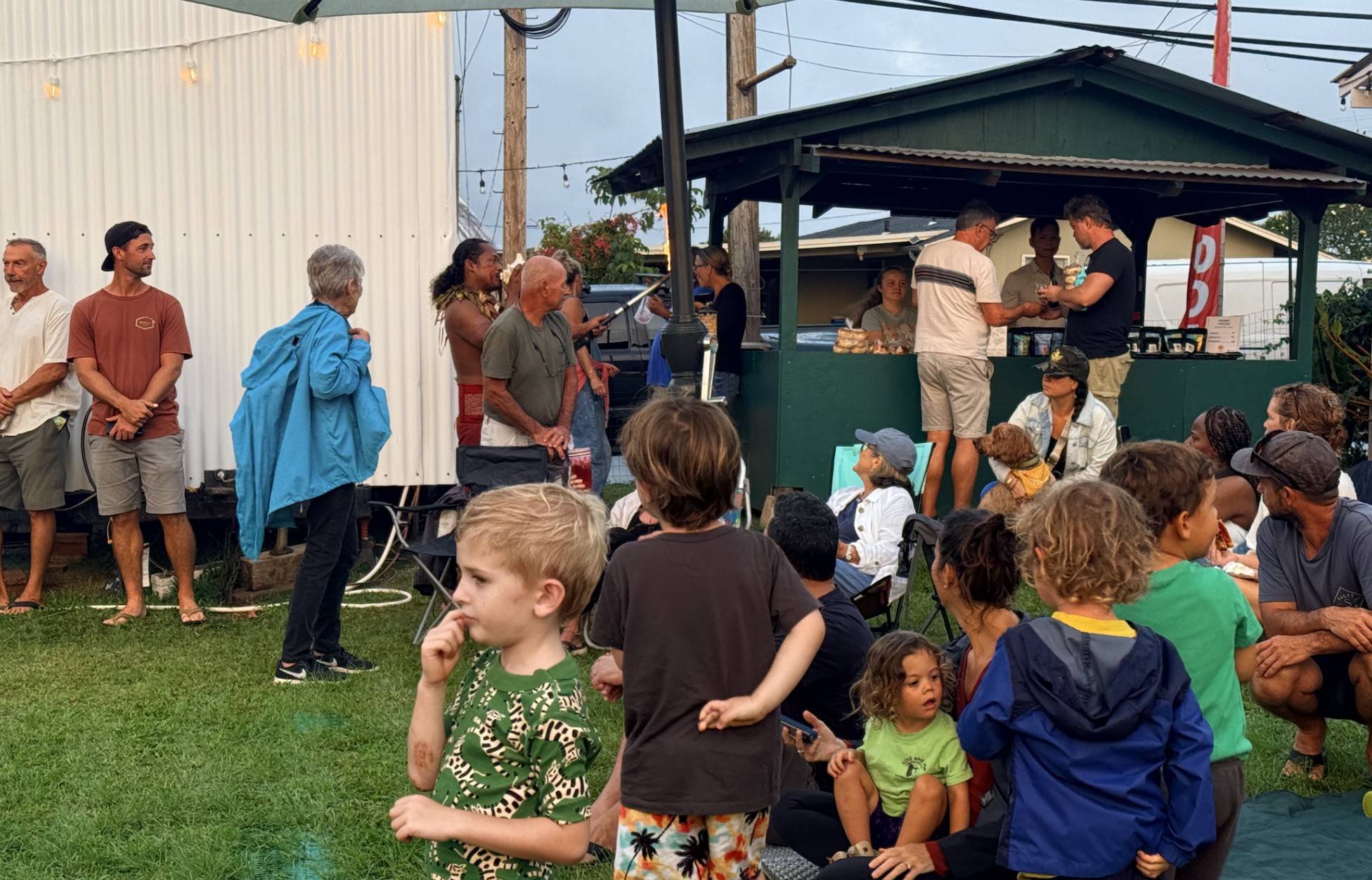
That’s why Yellow House has started a new co-op stand. On the evening of the relay gathering, a vendor selling furikake mix and the bagel peddler worked side by side underneath that green awning. A few weeks before the event, they were strangers, but they have since gotten to know both each other and other artisans through the challenge and opportunity of running the stand together.
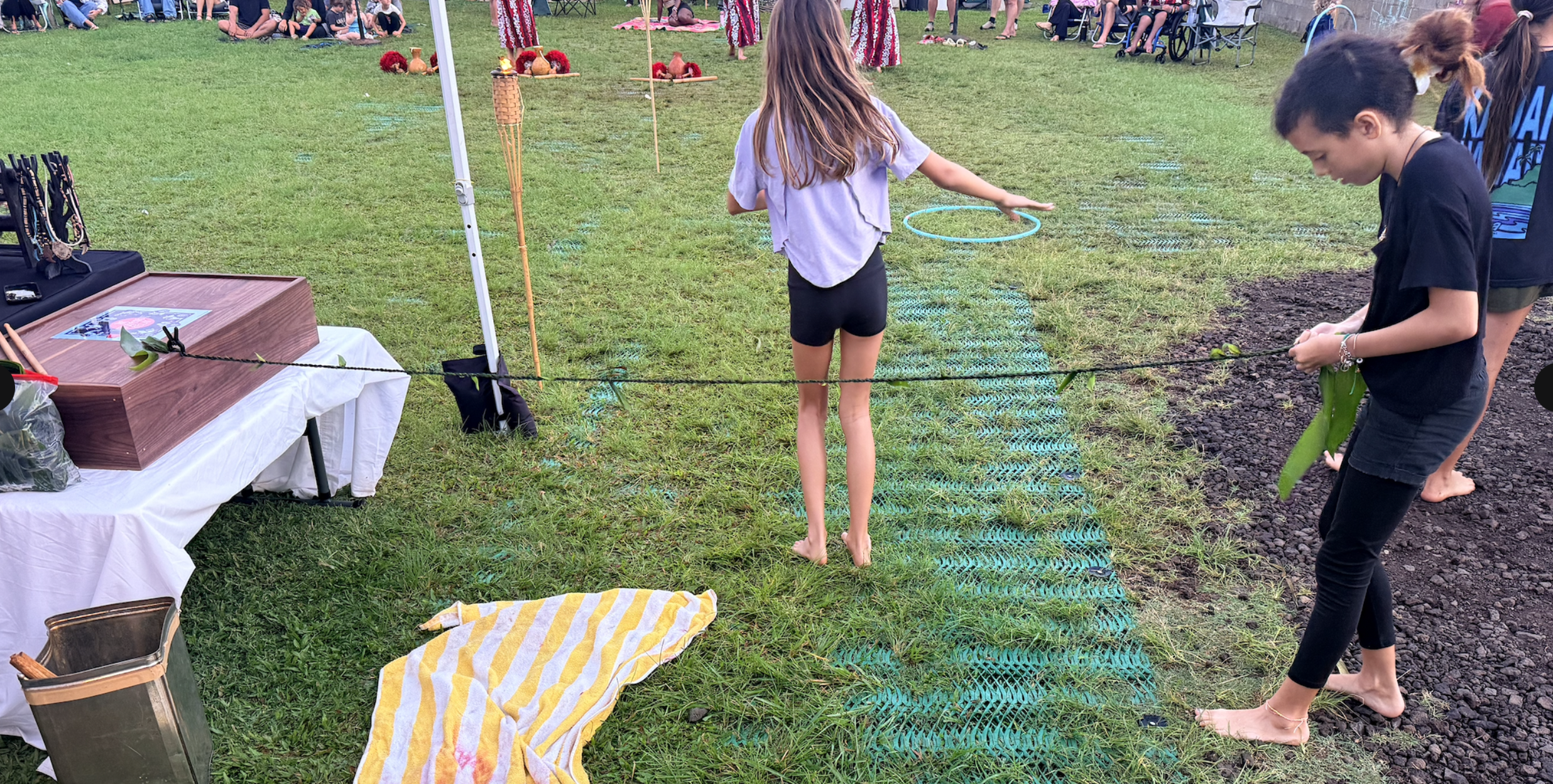
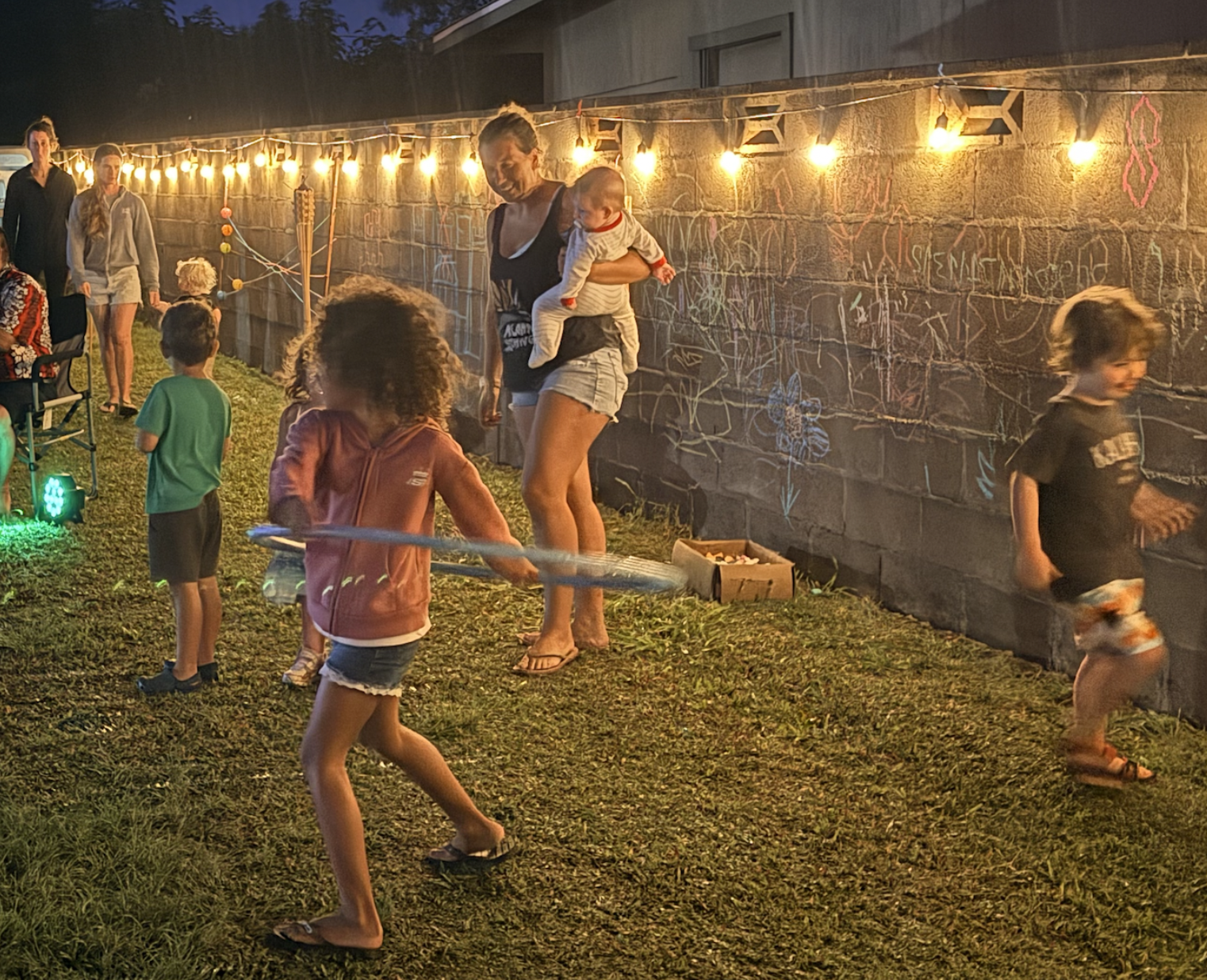
That’s why kids weren’t just welcome at the event, but encouraged to play a central role: to join the dancers at key moments, to decorate the wall that delineates the Yellow House’s border with vibrant chalk drawing, and most of all, to weave the eventual four foot long Ti leaf lei that was placed in the the relay box as the community’s gift.
And that’s why the relay event was described as a “celebration of community.” For while community and interdependence are never easy—as the intermittent rain throughout the relay event reminded gatherers—what both the founders of Yellow House and their neighbors understand is that there is so much joy in recognizing the immensity of assets in your local community. It’s easy to read interdependence as a duty or necessity (“we’re stuck with each other, I suppose”) but there’s a reason why the Yellow House grounds were full of smiles, laughters and celebratory whoops throughout a laid-back May evening. At its core, interdependence isn’t a burden, it’s a gift. We’ve got each other’s backs. We GET to have each other’s backs.
What commitments and/or declarations came out of the gathering?
One of the most exciting aspects of bringing the relay to Yellow House at this particular moment was the timing. The relay gathering was only their third event ever—all of which have drawn crowds that would make groups in much larger cities jealous. That’s not to say there won’t be ebbs and flows in the future, but it serves as a powerful reminder, both for their island and for gatherers everywhere: In a world where isolation is the norm, and it’s easy to live life as a metaphorical island, remember that our neighbors are hungry for a place to gather, and if a welcoming space is offered, it will soon be filled.
And what went in the box?
We already gave this away, but a gorgeous (and long) Ti leaf lei, woven over the course of the night by an eager group of kids. The lei, of course, is a symbol of aloha that is given at every major milestone event in Hawaii, from moments of celebration and accomplishment to mourning. It’s frequently given as a gift, in this case from the island of Kauai to an entire nation of gatherings.